Inside the US housing crisis: Behavioral insights from 5,000 households

Inside the US housing crisis: Behavioral insights from 5,000 households

Inside the US housing crisis: Behavioral insights from 5,000 households

Author: Luke Allchin
Date: January 14, 2026
Region: North America
Share:

In 2024, I wrote a piece on the US housing market, titled The American Nightmare, based on data from our MacroMonitor survey of over 5,000 households. Nearly 18 months on, the challenges US households face haven’t eased. The era that began with interest rate hikes in early 2022 has reshaped household behavior in ways that go beyond simple affordability metrics. The story now is about caution: a pivot from wealth-building towards debt repayment, from chasing the ideal of home ownership to protecting financial stability. 

A market in slow motion

The market slowdown is the backdrop, but the concerns are personal and widespread. When borrowing costs climbed in Q1 2022, households adjusted not just their budgets but their priorities. Many stopped stretching for equity and started safeguarding cash flow. Mortgage participation fell as fewer households entered the market or refinanced into higher-rate loans. At the same time, the number of households with outstanding credit card balances grew  an indication that inflation and everyday costs have squeezed discretionary incomeeven as overall balances across many product types stabilized or declined. This combination signals intentional deleveraging: a methodical attempt to pay down on what’s owed and avoid taking on new, high-cost obligations, even if it means deferring long-term asset growth.

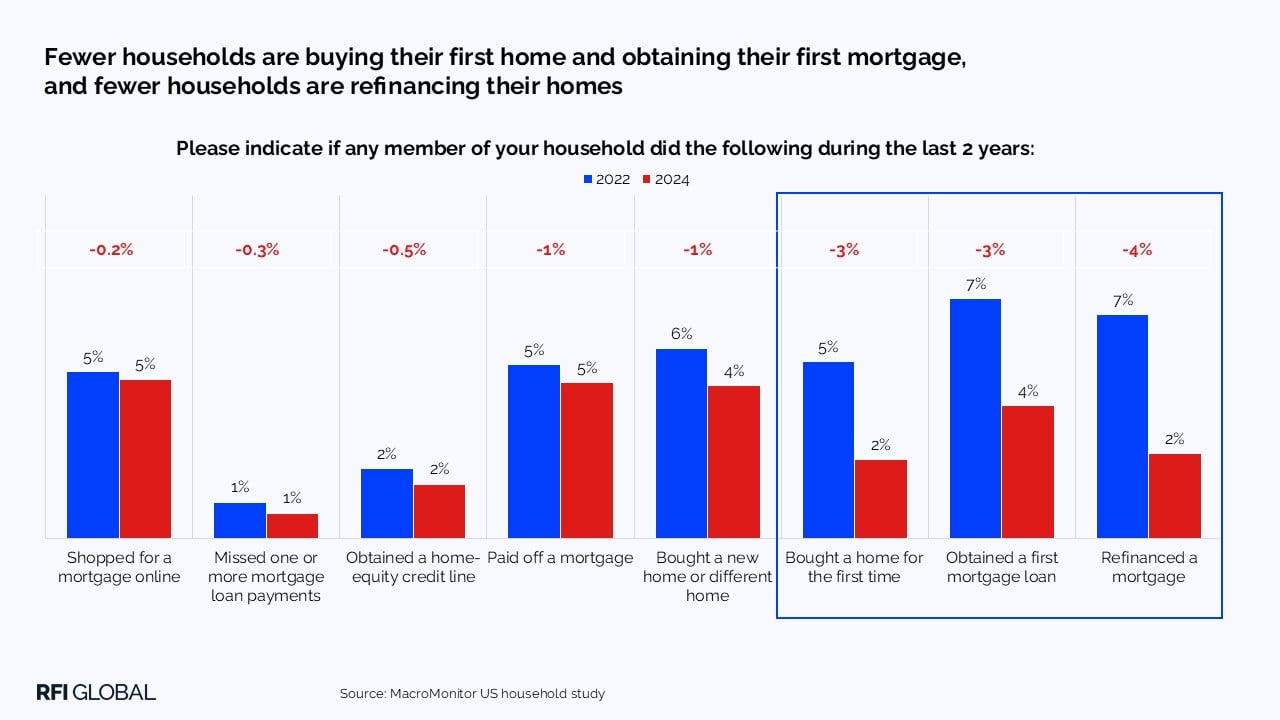
Fewer households are buying their first home and obtaining their first mortgage, and fewer households are refinancing their homes​

Stress become universal 

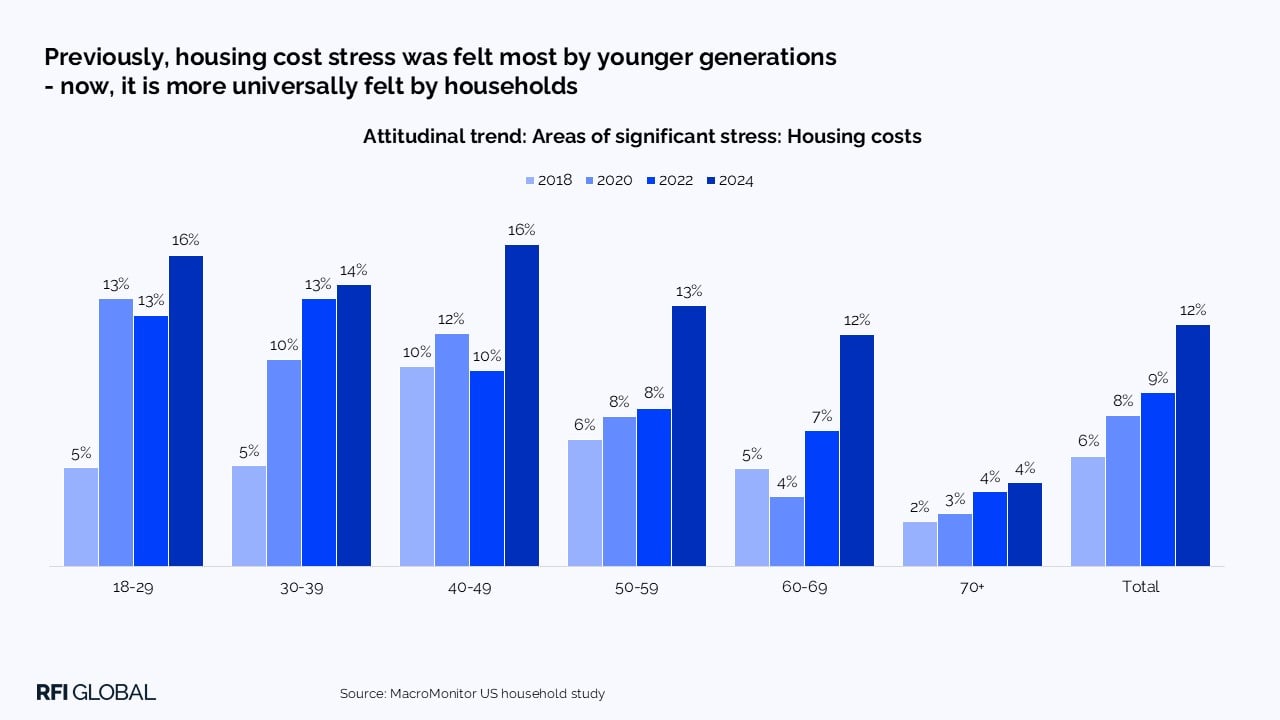
Household stress around housing has steadily intensified since 2020, and what once disproportionately impacted younger adults has now become a universal pressure point. Renters are feeling it most acutely, particularly those in rent-to-own arrangements where rising rents collide with uncertain pathways to ownership. The affordability gap is wider, but the volatility gap may be wider still. For many households, the perceived risk of stepping into a mortgage at elevated ratesalongside rising taxes, insurance, and maintenance costsoutweighs the benefits of building equity in the near term. Homeowners are not immune; they face higher carrying costs and fewer opportunities to refinance into better terms. The result is a broad, cross-generational unease with the cost and complexity of maintaining or acquiring a home. 

Previously, housing cost stress was felt most by younger generations​ - now, it is more universally felt by households

MacroMonitor data shows that households in the Westparticularly those in Colorado and California, are the most worried about rising housing costs. 14% of households in the West and South (4.67 million and 7.75 million households respectively) list housing costs as a significant source of stresscompared to households in the Midwest (11%) and Northeast (7%). 

The American Dream reimagined

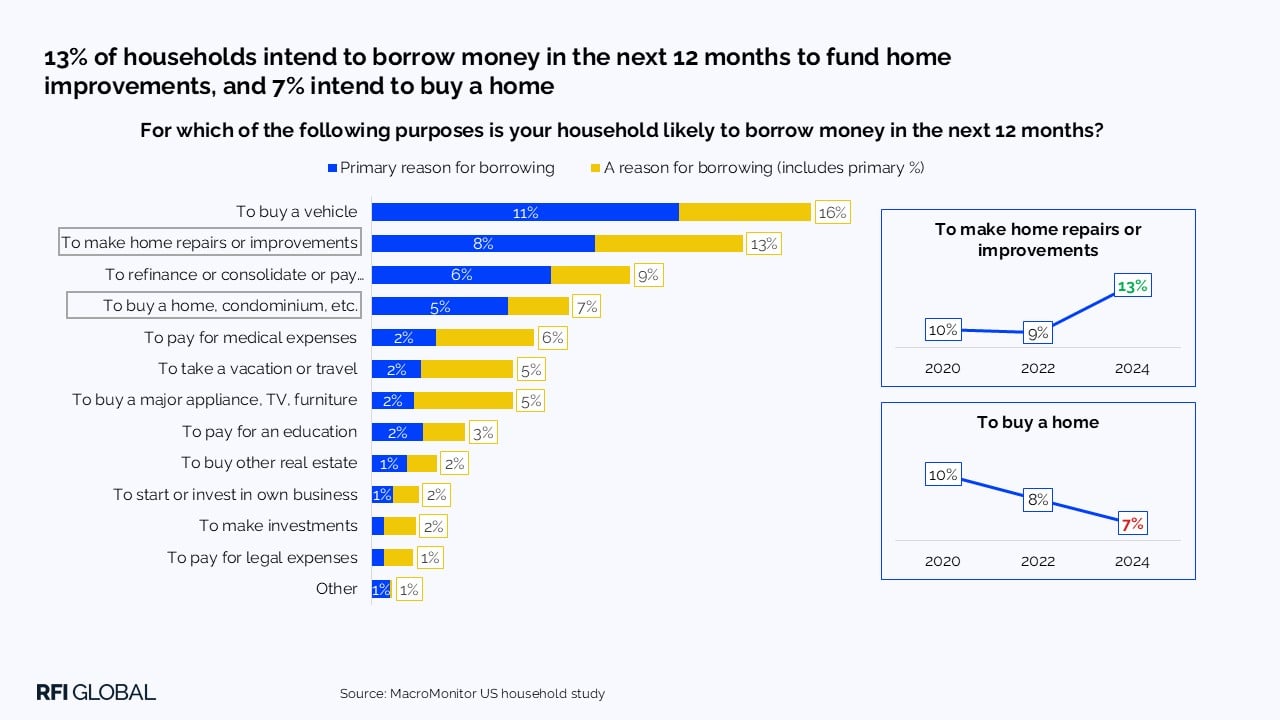
Homeownership still matters, but it no longer sits at the top of the financial hierarchy for most households. The dominant goal today is resilience. Emergency savings have become the number one priority, a clear marker of the cautious mindset that defines this moment. Concerns about loan acceptance have risen, reflecting both more conservative underwriting and households’ self-assessment of their risk. Fewer people are buying their first home or securing their first mortgage, and significantly fewer are refinancing. Many are managing multiple loan payments each month, elevating the importance of cash-flow discipline and smoothing out obligations wherever possible. Looking ahead, intentions are telling. MacroMonitor data show that more households plan to borrow for home improvements than to purchase a home, with 13% indicating plans to finance upgrades over the next 12 months and just 7% intending to buy – a pragmatic shift toward enhancing what exists instead of acquiring something new.

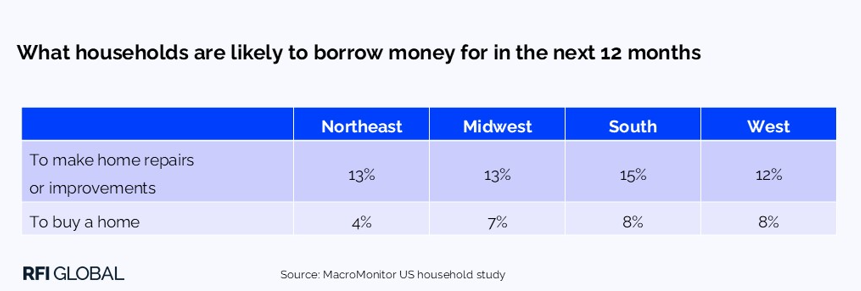
This is the reality for households across all regions of the US, but especially those residing in the Northeast where 13% plan to improve the home they have versus 4% planning to buy.

What households are likely to borrow money for in the next 12 months​

13% of households intend to borrow money in the next 12 months to fund home improvements, and 7% intend to buy a home​

The digital mortgage journey

Even as households step back from new purchases, the mortgage journey itself has undergone a quiet transformation. According to MacroMonitor, 59% of homeowners have a mortgage, and nearly half of those loans were obtained through banks. The path to approval is increasingly digital. Two-thirds of applicants now use online channels, with generational preferences shaping the experience. Younger consumers under 40 lean into smartphones, favoring speed, convenience, and mobile-native workflows such as camera-based document capture and biometric identity checks. Older applicants prefer using desktops and laptops, valuing larger screens and a setup that feels more familiar and comfortable when working with several documents at once.

What this means for financial institutions

For lenders and financial institutions, this moment is not defined by fewer opportunities but by different ones. The customer base is more cautious, digitally engaged, and focused on financial wellness. Institutions that pivot to meet these priorities can gain share even in a market with fewer purchase transactions.

Renovation lending should move to the forefront, with transparent pricing, staged disbursements, and energy-efficiency incentives that frame upgrades as part of a broader resilience plan. Debt consolidation products deserve renewed attention, with cash-flow analytics, payoff acceleration tools, and guardrails that prevent revolving balances from creeping back up. Risk management must evolve alongside these offerings, with dynamic signals that flag rising minimum payments, utilization spikes, or early delinquency patterns so institutions can intervene before distress turns into default.

The mortgage channel mix should be truly omnichannel. Mobile-first experiences must deliver instant pre-approvals and frictionless document capture, while desktop flows should support multi-party coordination, detailed checklists, and the ability to pause and resume without losing context. Human support, through embedded chat, video consultations, and proactive status notifications, can reduce abandonment and rebuild trust in a process that many perceive as confusing or unforgiving. Above all, lenders should think of affordability as a platform capability rather than a rate sheet. Interactive planning tools that illuminate rent-versus-buy trade-offs, stress-test future rate scenarios, unpack property taxes and insurance, and estimate renovation return on investment can help households make confident decisions, even if the most responsible choice right now is ‘not yet’.

2026 and beyond: The implications for financial institutions

This 2026 outlook points to stabilization, not reflation. 

The American Dream hasn’t vanished; it has been reimagined. Where ownership was once the singular milestone, the new pathway is a sequence of financially resilient steps: building a buffer, controlling obligations, improving the home you have, and, when the conditions align, moving into ownership on a stronger footing. 

Affordability constraints remain, households are disciplined, and digital is the default in the mortgage journey. Renovation activity and debt consolidation are likely to carry more lending momentum than purchase mortgages. In this environment, the institutions that combine risk management with products that align with the realities of household goals will perform well. 

These insights come from MacroMonitor, the largest survey of US households, covering all aspects of financial behavior and spending. For a deeper understanding of how households are navigating the housing market, get in touch to explore the full data set, and subscribe to our US newsletter for regular, evidence-based insights from the study. 

Frequently Asked Questions on the US housing crisis

A: RFI Global data shows US households are prioritising financial resilience, focusing on emergency savings, debt repayment, and home improvements rather than purchasing new homes. 

A: Western households report the most stress (13.9%), followed by the South (13.7%), Midwest (11%), and Northeast (7%).

A: Digital adoption is rising—two-thirds of applicants under 40 use mobile channels, while older consumers prefer desktops for mortgage applications.

A: Lenders need to align products and channels to household priorities, focusing on renovation lending, debt management tools, and digital-first, flexible mortgage experiences.

Data-driven insights for financial service leaders

Subscribe to The Banknote, our monthly newsletter delivering expert perspectives and exclusive analysis, powered by 200,000 consumer and 60,000 business interviews each year to help you stay ahead in a fast-changing financial world.

Our latest insights

ONLY OF THE TYPE(S)


Advanced Search