
Australian women are significantly less likely than men to invest. Just 23% currently hold an investment product, compared with 36% of men. For financial institutions looking to grow investment relationships, increase funds under management and deepen customer engagement, this gap represents a significant untapped opportunity.
The reasons aren’t as straightforward as income or access. Many women perceive investing differently, have lower confidence in their investment knowledge and expect different forms of support before getting started. Understanding these differences is critical for institutions looking to expand participation and grow long-term investment relationships.
We analysed data from our Savings and Deposits Council study to explore the barriers preventing Australian women from investing and identify practical actions financial institutions can take to help close the gap.
Why don’t women invest?
Women’s lower participation in investing is not driven by a lack of interest in building wealth. The biggest barriers are concerns about risk, confidence and complexity. More than two in five women say they are worried about the risk of losing money, and a similar proportion don’t feel confident enough in their investment knowledge to get started. They also think investing is complicated.
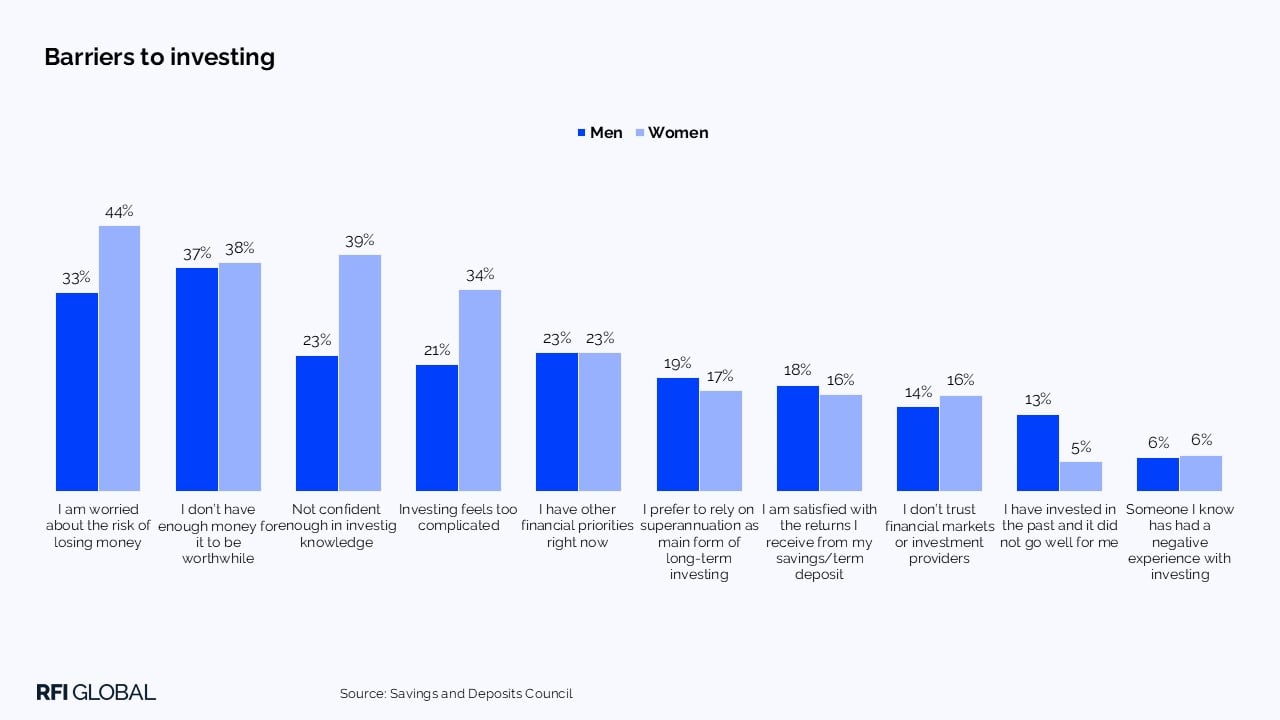
Women are more likely than men to prefer keeping their money in a savings account rather than investing it (49% vs 36%). Men, in contrast, are more likely to see investing as a way to build wealth and feel more confident making investment decisions. Men also have a broader range of investment products, with an average of 2.8 investment products compared to 1.8 among women and are also more likely to hold alternative investments such as cryptocurrency (29% vs 8%).
The confidence gap is not driven by investment outcomes. Among current investors, men and women report similar levels of portfolio performance, with neither group more likely to say their investments have increased or decreased in value.
Women invest later in life and contribute less
Women typically begin investing later in life. Peak participation among women occurs a decade later than among men. While male investment participation peaks between the ages of 35-44, participation among women doesn’t peak until 45-54. Women are also more likely to delay starting until they have reached a higher income level, typically $200,000 or more, whereas men are more likely to start investing when earning between $90,000 and $120,000.
Women are also less likely to make ongoing contributions once they start investing. Among current investors, 14% of women say they have not added money since their initial investment, compared with 7% of men. Combined with starting later in life, less frequent contributions can significantly reduce the long-term benefits of compounding.
How financial institutions can close the gap
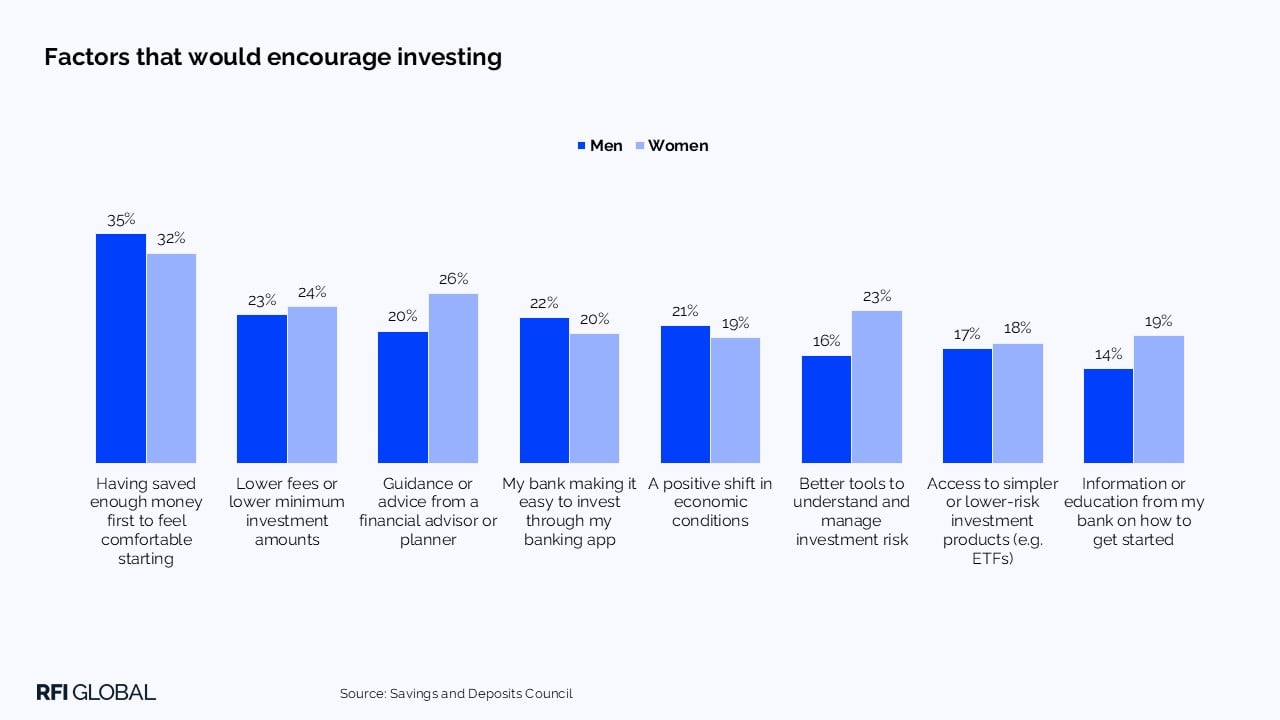
A third of both men and women believe it is important to build up a sufficient savings buffer before investing. Beyond that, however, women are looking for different forms of support. Professional guidance from a financial adviser or planner, better tools to understand and manage investment risk, and more information on how to get started are all more important motivators for women than men.
Our findings highlight the importance of providing support when women are considering investing. Professional guidance, investment education and practical tools to understand investment risk can all help build confidence and encourage participation.
Trust and advocacy also play an important role. Among current investors, women are significantly more likely than men to say they started investing because of a recommendation from a friend, family member or colleague (19% vs 11%). This highlights the importance of building confidence through social proof and customer advocacy.
Helping more women build long-term wealth
Australian women are more likely than men to view investing as complicated and risky, start investing later in life, and wait until they reach a higher income before getting started. They are also less likely to make ongoing contributions and tend to hold smaller, more traditional portfolios. Confidence is a significant barrier throughout the investing process.
Professional guidance, investment education and practical support are among the most effective ways financial institutions can help women get started. Women are also more likely to be influenced by recommendations from friends, family members and colleagues, highlighting the importance of trust and personal experience when making investment decisions.
Helping women start investing earlier and with greater confidence could increase participation and support better long-term financial outcomes.
Get in touch if you’d like further insights from our survey.
Frequently Asked Questions
Q: Why are women less likely to invest than men in Australia?
RFI Global data shows that Australian women are more likely to perceive investing as risky and complicated and are less confident in their investment knowledge. They are also more likely to keep their money in savings rather than investing.
Q: What are the biggest barriers preventing women from investing?
The main barriers are concerns about the risk of losing money, lower confidence in investment knowledge and the perception that investing is complicated. Women are also more likely than men to prefer keeping their money in a savings account.
Q: What would encourage more women to start investing?
Professional guidance, investment education, information on how to get started and support in understanding investment risk are among the strongest factors that would encourage more women to invest. Personal recommendations also play an important role.
Q: How can financial institutions help close the investing gender gap?
Financial institutions can help close the gap by providing education, guidance and practical support when women are considering how to begin investing. Building confidence early is critical to increasing participation.
Data-driven insights for financial service leaders
Subscribe to The Banknote, our monthly newsletter delivering expert perspectives and exclusive analysis, powered by 200,000 consumer and 60,000 business interviews each year to help you stay ahead in a fast-changing financial world.
