
As 2026 fast approaches, US households are rethinking their approach to investing. A mix of economic uncertainty, shifting attitudes toward risk, and evolving market perceptions is reshaping how everyday investors allocate their money. Our data shows that this shift is fueling a surge in mutual fund investing.
For financial institutions, this is more than just a trend. It is a significant opportunity to capture new investors, reposition existing products, and forge long-term trust.
Investor sentiment shifts toward stability
Consumer sentiment around risk is changing, and the numbers reflect it. A growing share of US households now disagrees with the statement: “I am willing to accept some risks of losing money if an investment is likely to come out ahead of inflation in the long run.”
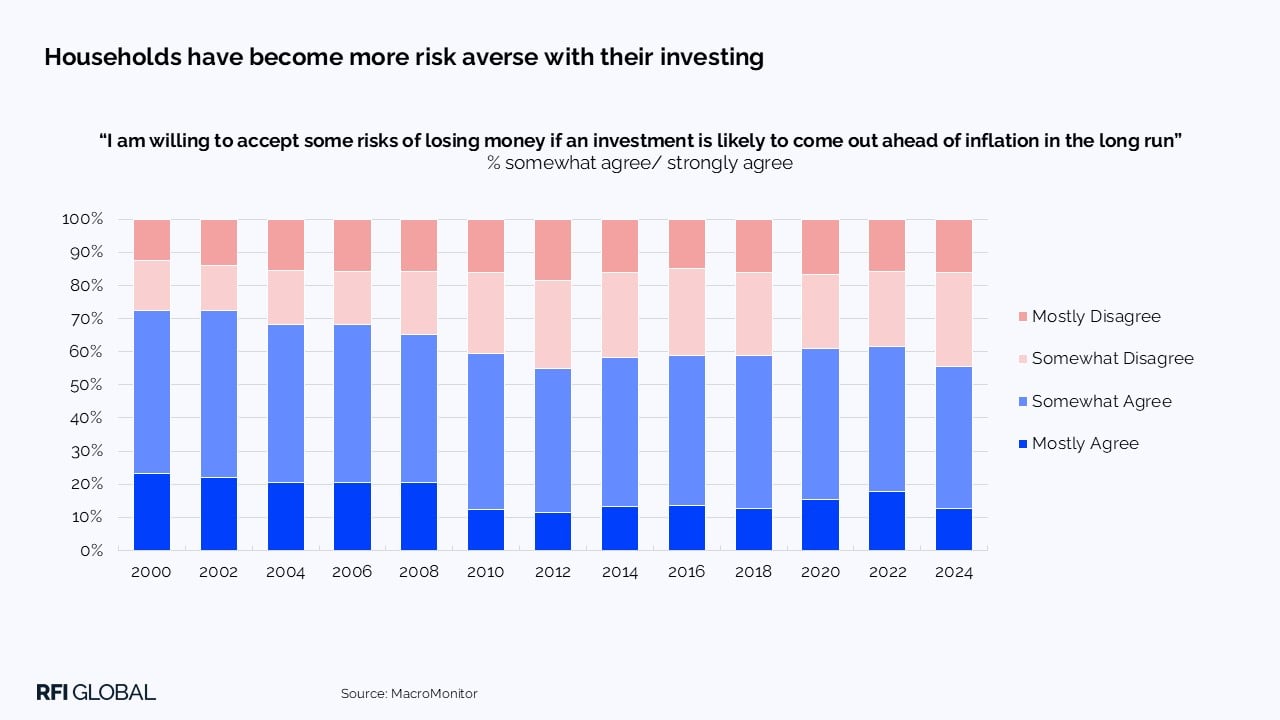
This shift signals a stronger appetite for stability and a more cautious approach to growth. While investors are not abandoning the market altogether, they are looking for products that can balance risk and return in a way that feels sustainable.
Mutual funds fit squarely into this evolving preference. Their built-in diversification helps to smooth market volatility, and the presence of professional management offers investors reassurance that their money is safe. In a time when confidence is fragile, these qualities matter.
Bonds lose their shine as US households turn to mutual funds
Traditionally, bonds have been the refuge of cautious investors. Yet RFI Global’s MacroMonitor data shows their role is being questioned. At the end of 2022, 33% of US households agreed with the statement: “Bonds are no longer a good investment.” Today, that figure has climbed to 41%.
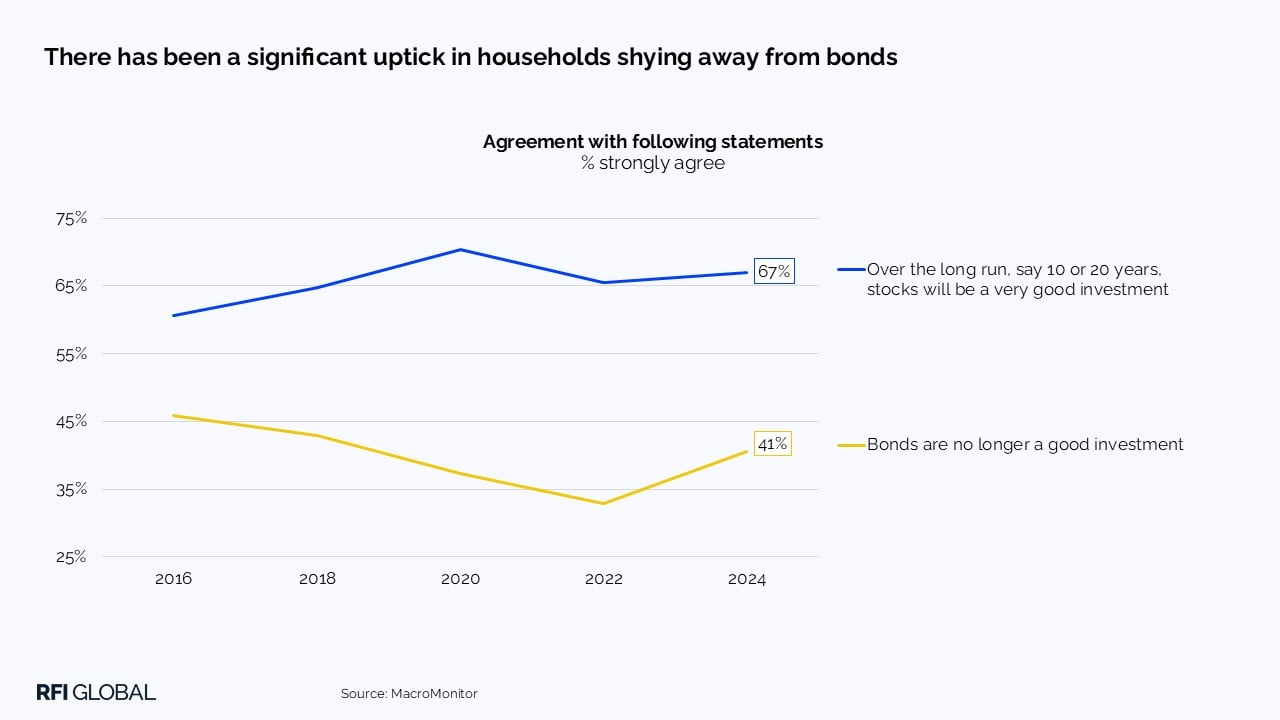
This growing skepticism is not without cause. Prolonged interest rate volatility, ongoing inflation pressures, and questions about real return potential have all chipped away at the bond market’s appeal. For many households, bonds no longer deliver the sense of security or predictability they once promised.
This retreat from bonds creates a vacuum, and mutual funds are increasingly filling the space. Unlike single-asset strategies, mutual funds can blend exposure across equities, fixed income, and alternative sectors, providing the balance investors still crave, but with more growth potential.
Mutual funds hit record highs among US households
The numbers around mutual fund interest are telling. Our data shows that nearly 1 in 5 US households now report an intention to buy shares in a mutual fund. Even more striking is that half of these investors will be entering the mutual fund market for the first time.
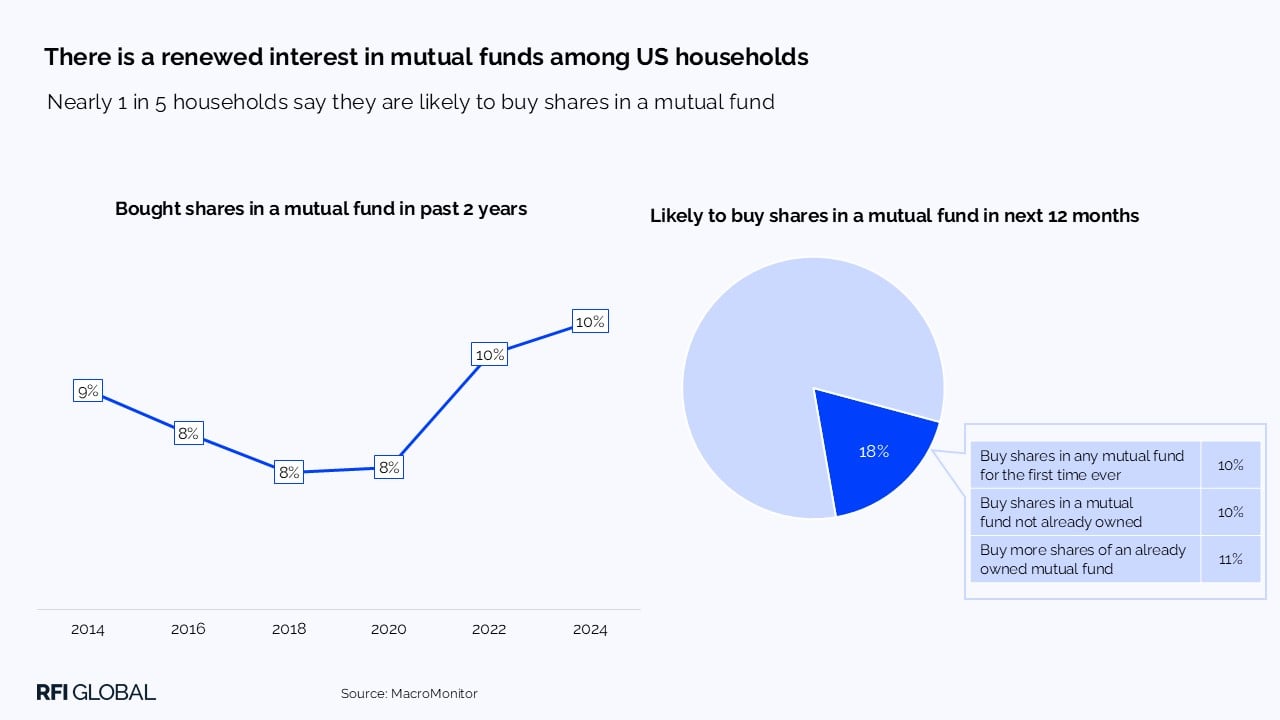
This represents not just incremental growth but a genuine expansion of the investor base. It’s a wave of new participation that could reshape the mutual fund landscape in the years ahead.
At the same time, the average value held in mutual funds has surged to $439k, marking a significant increase compared to recent years (in 2022, households with mutual funds invested $352k in them on average). By contrast, the average value of funds held in bonds has declined, underlining a clear shift in where households are putting their money.
Together, these figures point to more than a short-term movement. They indicate a realignment of household investing strategies away from low-yield or single-asset vehicles and toward professionally managed, diversified portfolios.
Why mutual funds appeal in this moment
The growing appeal of mutual funds is not accidental. Several factors make them particularly well-suited to the current market mood, offering diversification, professional management, accessibility and flexibility.
In uncertain markets, spreading risk across assets provides investors with a sense of security. Mutual funds do this by design. For households that want to invest but feel less confident navigating volatile conditions alone, active oversight is a key reassurance. Mutual funds remain one of the most approachable investment vehicles, appealing both to high-net-worth individuals and to new investors testing the waters. From equity-focused funds to balanced or sector-specific strategies, mutual funds offer tailored options for different risk profiles.
Implications for financial firms
For financial institutions, the rise in mutual fund interest presents a rare opportunity. Seizing it requires more than offering products; it requires aligning with investor sentiment and behaviors. Several strategic priorities stand out:
1. Capture first-time investors
With so many households planning to buy mutual funds for the first time, firms can secure long-term relationships by making entry easy and reassuring. This means clear onboarding processes, educational resources, and accessible digital tools. A positive first experience could translate into decades of loyalty.
2. Reposition products against bonds
As skepticism around bonds grows, marketing should emphasize the comparative advantages of mutual funds. Firms can highlight their ability to balance risk and reward, deliver professional oversight, and provide exposure to asset classes that may be inaccessible to individual investors.
3. Strengthen digital platforms
Households are increasingly making investment decisions online. Platforms that offer transparent fund performance visuals, easy-to-use comparison tools, and engaging educational content will stand out. Integrating digital with advisory services can also reassure investors who want both autonomy and guidance.
4. Build trust through engagement
Investors in uncertain times crave not just products but voices they can trust. Firms that host webinars, publish market insights, and highlight the expertise of their fund managers will stand out as partners, not just providers. Trust and credibility will be deciding factors in whether households choose one provider over another.
Embracing the surge
The renewed interest in mutual funds is more than a passing phase. It reflects deeper changes in investor psychology: a desire for balance, a skepticism of traditional safe havens like bonds, and a recognition that diversification and professional oversight can provide both protection and growth.
Financial firms must recognize this mood and act on it. Those that meet investors where they are, through digital engagement, education, and clear value propositions, stand to capture not just assets, but long-term trust.
As we move toward 2026, the message is clear: mutual funds are back in the spotlight. For households, they represent security and opportunity. For firms, they offer a chance to embrace the surge of interest, strengthen relationships, and shape the future of investing.
RFI Global tracks how US households are investing, from first-time fund buyers to shifting attitudes toward bonds. Get in touch to learn how our insights can help you align products and messaging with the investor mood.
Frequently Asked Questions
Q: Why are US households investing more in mutual funds?
A: RFI Global data shows households are seeking stability and diversification as bonds lose appeal. Mutual funds offer professional management, balanced risk, and growth potential.
Q: How do mutual funds compare to bonds for cautious investors?
A: While bonds have long been seen as ‘safe,’ 41% of US households now say they’re no longer a good investment. Mutual funds provide diversification and greater flexibility, making them more attractive.
Q: What does the rise of mutual funds mean for financial institutions?
A: It creates an opportunity to capture new clients, reposition products, and build long-term trust by offering digital tools, education, and clear value propositions.
Data-driven insights for financial service leaders
Subscribe to The Banknote, our monthly newsletter delivering expert perspectives and exclusive analysis, powered by 200,000 consumer and 60,000 business interviews each year to help you stay ahead in a fast-changing financial world.
