
As the global economy evolves, a new demographic is steadily reshaping the landscape of wealth and financial services: the Emerging Affluent. Emerging Affluents are one of the fastest-growing demographics in the US, according to RFI Global’s MacroMonitor study. We define Emerging Affluents in this article as people with $125K+ in income and below $500k in investable assets. We define Affluents, or High Net-Worth individuals, as households with $1M + in investable assets regardless of income.

This group, typically characterized by rising incomes, escalating investments and increasing purchasing power, is swiftly transitioning from the middle class to the ranks of affluence. The Emerging Affluent is typically younger professionals, entrepreneurs, and tech-savvy individuals who have leveraged education, innovation and globalisation to climb the economic ladder.
A new opportunity
Financial institutions find themselves at a pivotal juncture, facing the need to adapt and innovate to cater to the unique demands and expectations of this dynamic group.
Traditional banking models, designed with long-established affluent clients in mind, must now accommodate the distinct financial behaviors and aspirations of the Emerging Affluent. This includes a preference for digital banking solutions, personalized financial advice and investment opportunities that align with their values and lifestyles.
As we navigate the changing tides of wealth management, it is crucial to understand how financial institutions can effectively engage with and support the financial journeys of the Emerging Affluent, ensuring they are well-positioned to thrive in a rapidly transforming economic landscape.
To explore the challenges and opportunities presented by this demographic shift, we mined our MacroMonitor results, the most comprehensive survey of financial services in the US, covering household behaviors and attitudes to all financial products and services. In particular, we looked at the need for enhanced digital infrastructure, innovative financial products and brand perception.
Adapting to the digital natives
One of the most significant shifts that financial institutions must embrace is the digital-first mindset of the Emerging Affluent. This demographic, often referred to as digital natives, has grown up with technology as an integral part of their lives. They expect seamless, efficient and accessible financial services that can be managed through their smartphones and other devices. This expectation is driving banks and financial institutions to invest heavily in digital infrastructure, from mobile banking apps to online investment platforms.
“Younger investors expect technology in their investing experience,” said Gonzalo Pradas, head of wealth management at Openbank. “And now, thanks to the arrival of digital platforms, AI and robotic process automation, wealth managers are able to serve them in an optimal way.” Forbes.
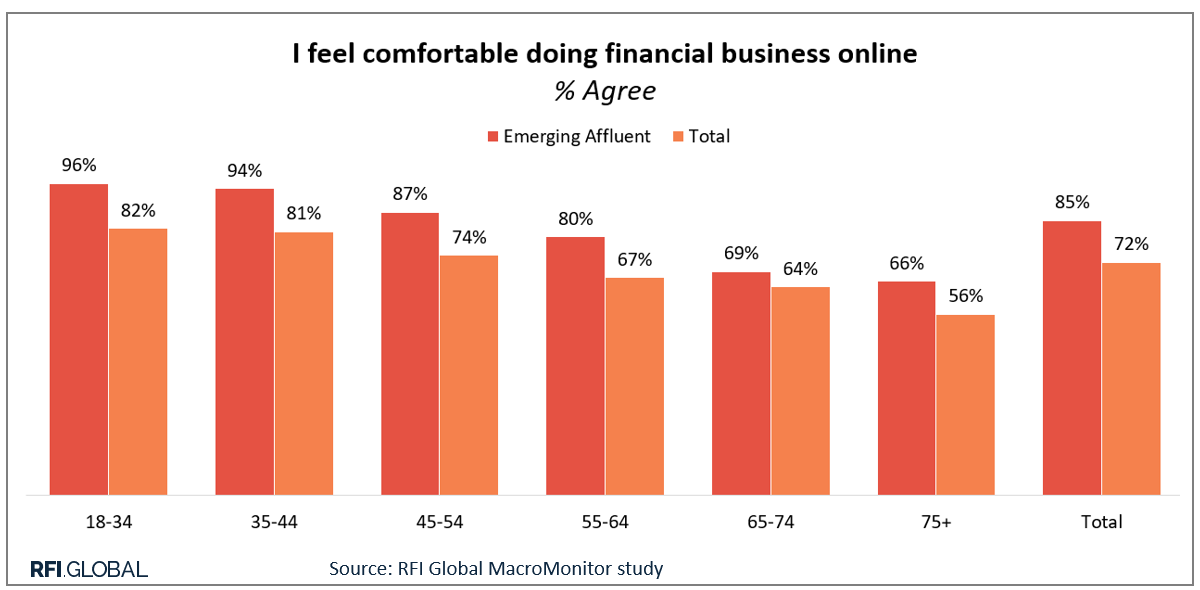
Innovations such as AI-driven financial planning tools, robo-advisors, and blockchain-based security measures are becoming essential components of modern financial services. Institutions that fail to provide these digital solutions risk losing this lucrative and rapidly growing customer base to more agile and tech-savvy competitors. Therefore, embracing technology is not just an option but a necessity for staying relevant in the evolving financial landscape.

The challenges appealing to Emerging Affluents
The acquisition of Emerging Affluent customers presents a unique set of challenges for banks and financial institutions. As this demographic grows in number and economic influence, understanding and overcoming these challenges is critical for banks aiming to attract and retain these clients.
Traditional banks often struggle with a perception problem, being seen as outdated or inflexible by younger, Emerging Affluent clients. Rebranding efforts and marketing strategies aimed at showcasing innovation and customer-centricity are essential but can be difficult to execute effectively. Banks need to communicate their value propositions clearly and convincingly to alter these perceptions.
Know your affluent audience
The rise of the Emerging Affluent represents both a challenge and an opportunity for financial institutions. To successfully engage with this demographic, banks and financial service providers must understand their unique characteristics, embrace digital innovation, offer tailored financial solutions and align their offerings and services with the ethical values of their future or current clients.
Financial institutions that navigate these changes effectively will be well-positioned to capitalize on the growth and influence of the Emerging Affluent. By doing so, they can ensure not only their own continued relevance and profitability but also contribute to a more dynamic, inclusive and socially responsible financial ecosystem.
Get in touch to find out more about the study and your target audiences. Based on over 5,000 interviews, MacroMonitor provides the most comprehensive insights into US financial services behavior across all household financial products.
Subscribe to get the latest RFI data and insights.
Data-driven insights for financial service leaders
Subscribe to The Banknote, our monthly newsletter delivering expert perspectives and exclusive analysis, powered by 200,000 consumer and 60,000 business interviews each year to help you stay ahead in a fast-changing financial world.
